

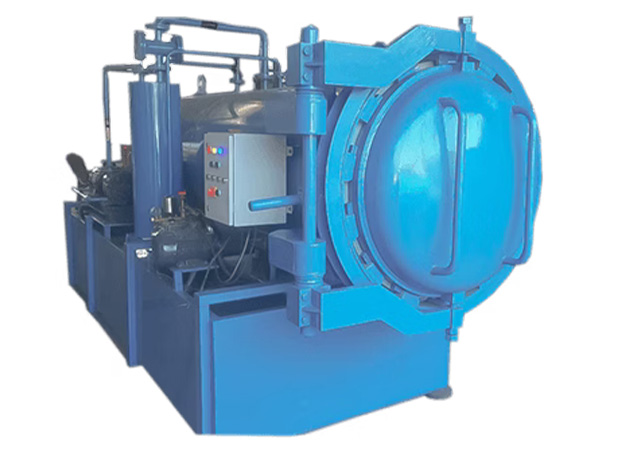
Wood Impregnation Plant
Wood impregnation is a process in which chemical substances are introduced into wood in order to improve its physical and mechanical properties. The treatment increases resistance to moisture, insects, fungus, and environmental damage while improving strength and durability.
Wood Impregnation Plants are designed to treat wood under controlled vacuum and pressure conditions, allowing preservatives to penetrate deep into the wood fibers. This significantly increases service life and ensures reliable performance in outdoor and industrial environments.
The system typically includes an impregnation tank, vacuum system, storage tanks, pumps, and control systems designed for efficient and uniform treatment.
Features
- Vacuum and pressure wood treatment process
- Deep penetration of preservatives into wood fibers
- Improved resistance to moisture and decay
- Protection against termites and insects
- Increased wood durability and strength
- Corrosion resistant construction
- Easy to operate system
- Long functional life
- Available in multiple configurations
- Custom-built plant options
Applications
-
1Treatment of outdoor construction wood
-
2Protection of wooden poles and fencing
-
3Preservation of railway sleepers
-
4Treatment of wooden furniture components
-
5Marine and waterfront wood protection
-
6Structural timber preservation
-
7Termite and insect protection treatment
-
8Industrial wood processing plants
Questions? You’re covered
Download Brochures


Have a project in mind? Contact Us
From oil purification and evacuation systems to VPI and drying plants, our team delivers reliable, high-performance solutions tailored to your industrial requirements.
Mon - Sat
09 AM - 07 PM
Get in Touch
Our skilled engineering team is ready to assist you with any inquiries.