

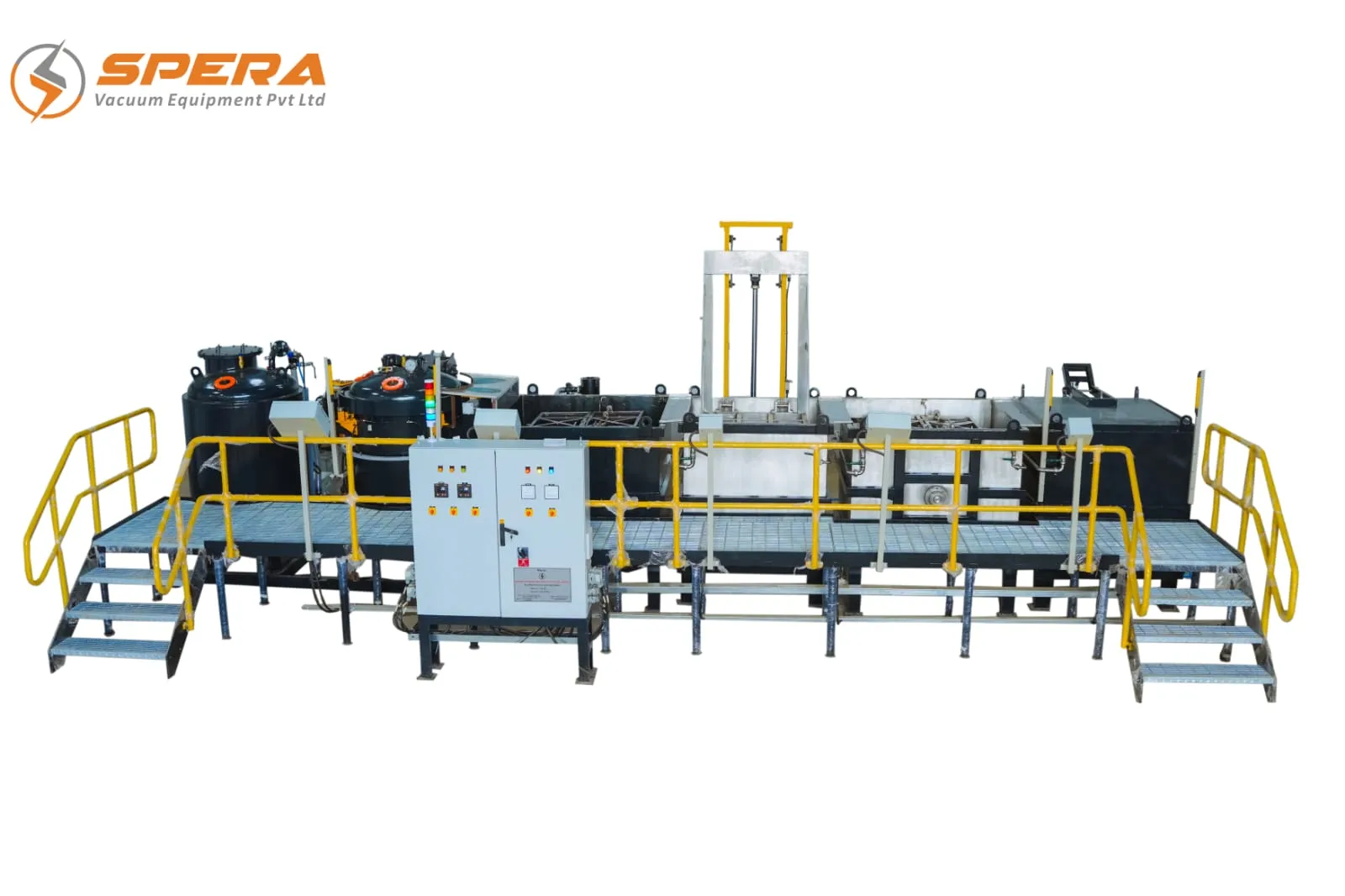
Casting Impregnation Plant: A Complete Guide to Porosity Sealing in Metal Castings
Casting Impregnation Plant: Why Porosity Sealing Matters
Metal casting allows manufacturers to produce complex components with high dimensional accuracy and mechanical strength. However, even a component that looks perfect from the outside can contain microscopic pores, cavities and internal voids.
These imperfections can become a serious problem when the component needs to retain oil, air, gas, coolant, hydraulic fluid or other pressurized media.
This is where a Casting Impregnation Plant becomes useful.
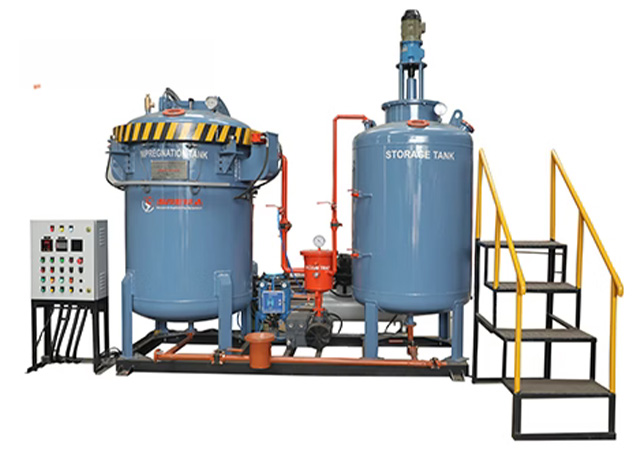
A casting impregnation system uses a controlled combination of vacuum and pressure to introduce resin or sealant deep into porous areas of metal components. The process helps seal internal leakage paths and can improve pressure retention, product quality and component reliability.
Spera Vacuum Equipment Pvt. Ltd., based in Pune, manufactures casting and metal impregnation systems for foundries, automotive manufacturers, pump and valve manufacturers, compressor OEMs and engineering industries.
What Is a Casting Impregnation Plant?
A Casting Impregnation Plant is an industrial system designed to seal microscopic pores, cracks and internal voids present in cast metal components.
During casting, processes such as shrinkage and gas formation can create small cavities inside the material. These defects may not be visible during normal inspection but can later become pathways for oil, air, gas or other fluids to escape.
The impregnation process addresses this by using vacuum to remove trapped air from the porous structure, followed by the introduction of a suitable sealant. Pressure is then applied to encourage deeper penetration into the internal voids.
The process is suitable for several metal components, including:
- Aluminium castings
- Cast iron components
- Steel castings
- Die-cast components
- Powder metal components
Our Casting Impregnation Plant is designed for porosity sealing and leak-proof treatment of metal castings and machined components.
What Is Casting Porosity?
Casting porosity refers to small internal pores or voids that form within a metal component during the casting process.
These defects can occur due to factors such as shrinkage and gas formation during solidification.
While some porosity may have little effect on a component, it becomes important when the part needs to be:
- Leak-proof
- Pressure-tight
- Fluid-retaining
- Gas-tight
- Reliable under operating conditions
For example, a pump housing may look completely intact but still allow hydraulic fluid to escape through microscopic internal passages.
Similarly, a valve body or compressor housing may fail a pressure test because of internal porosity.
Why Does Casting Porosity Matter?
Porosity can remain hidden until the component is subjected to pressure or leak testing.
For manufacturers, untreated porosity can result in:
- Fluid leakage
- Pressure loss
- Rejected components
- Higher scrap rates
- Rework and repair costs
- Inconsistent product quality
- Problems during assembly
- Reduced customer acceptance
The issue becomes particularly important for automotive components, pump and valve bodies, compressor housings, hydraulic components and other parts that need to retain fluids or gases.
A suitable impregnation process can provide a treatment route for components where the porosity is suitable for sealing.
How Does a Casting Impregnation Plant Work?
The basic principle is to create the right conditions for the impregnation material to reach internal pores that cannot be treated effectively from the surface.
A typical vacuum pressure impregnation cycle involves several stages.
1. Component Loading
The cast or machined components are placed inside the impregnation chamber.
The chamber size depends on:
- Component dimensions
- Number of components per batch
- Production volume
- Required process arrangement
Spera Vacuum offers custom chamber sizes according to application requirements.
2. Vacuum Application
Vacuum is applied to the chamber containing the components.
This helps remove air from the internal pores and voids.
Removing trapped air is important because it creates space for the impregnation material to enter the porous structure.
3. Sealant Introduction
After the required vacuum conditions are reached, the resin or sealant is introduced into the system.
The impregnation material moves into the spaces where air was previously present.
4. Pressure Impregnation
Pressure is then applied to encourage deeper penetration of the sealant into the internal pores and micro-leakage paths.
The combination of vacuum and pressure is the core of the casting impregnation process.
5. Draining and Further Processing
After impregnation, excess resin or sealant can be handled through the storage and transfer system.
The component can then proceed to the required finishing or curing stage based on the material and manufacturing process being used.
The exact cycle parameters depend on the component, material, porosity, sealant and production requirements.
Casting Impregnation vs. Leak Testing
Casting impregnation and leak testing serve different purposes.
Leak testing is primarily used to determine whether a component has a leakage problem.
Impregnation is a treatment process used to seal suitable internal porosity and leakage paths.
| Feature | Leak Testing | Casting Impregnation |
|---|---|---|
| Primary purpose | Detect leakage | Seal suitable internal porosity |
| Process type | Inspection | Treatment |
| Fills internal pores | No | Yes |
| Uses sealant | Usually no | Yes |
| Addresses leakage path | Identifies it | Can seal it |
| Production role | Quality inspection | Porosity treatment |
In many manufacturing environments, both processes can have a role. Testing can identify components with leakage issues, while impregnation can provide a treatment option for suitable porosity-related defects.
Which Materials Can Be Impregnated?
Casting impregnation can be used with different types of metal components.
The system is suitable for:
- Aluminium castings
- Cast iron components
- Steel components
- Die-cast parts
- Powder metal components
The appropriate process depends on the material, component geometry, type of porosity, sealant and final application.
Applications of Casting Impregnation Plants
Casting impregnation is used across industries where metal components need reliable pressure retention or resistance to fluid leakage.
Automotive Engine Components
Automotive engine components can contain internal porosity that may affect their ability to retain fluids or withstand operating conditions.
Impregnation can be used to seal suitable porous areas before the component moves into further production or assembly.
Pump and Valve Bodies
Pump and valve bodies often need to retain fluids under pressure.
Internal pores can become leakage pathways, making impregnation useful for suitable components.
Compressor Housings
Compressor housings and related cast components can require effective sealing to maintain pressure during operation.
Hydraulic and Pneumatic Components
Hydraulic and pneumatic components often handle pressurized fluids or gases, making leak resistance an important quality requirement.
Die-Cast Aluminium Components
Die-cast aluminium parts can contain internal porosity. Suitable impregnation processes can seal these pores and improve the component's leak-tightness.
Pressure-Tight Castings
Components designed for pressure applications can benefit from porosity sealing where internal leakage paths affect product acceptance.
Powder Metallurgy Components
Certain powder metal components can also require impregnation where internal porosity creates leakage or performance concerns.
Industrial Machine Components
Various industrial cast components can be treated when internal porosity affects pressure retention, fluid handling or product quality.
These applications are listed by Spera Vacuum for its Casting Impregnation Plant.
Key Features of a Casting Impregnation Plant
A modern impregnation system requires coordinated vacuum, pressure, sealant handling and process-control systems.
Key features of the Spera Vacuum Casting Impregnation Plant include:
- Advanced vacuum pressure impregnation system
- Effective sealing of casting porosity and micro-cracks
- Deep sealant penetration into internal voids
- Compatibility with aluminium, iron, steel and die-cast parts
- PLC/HMI-based automatic control
- Heavy-duty pressure vessel and vacuum chamber
- Resin or sealant storage and transfer system
- Fast processing cycles for production lines
- Low-maintenance operation
- Energy-efficient design
- Custom chamber sizes
- Automation options
These features come as standard, with further options configured to suit the application.
Manual, Semi-Automatic or Automatic Operation
The right level of automation depends on production volume and process requirements.
Manual System
Manual operation can be suitable for smaller production volumes or specialized applications where operators need greater control over individual process stages.
Semi-Automatic System
Semi-automatic operation combines operator-controlled steps with automated functions.
This can provide a balance between flexibility and process consistency.
Automatic System
Automatic systems can use PLC/HMI-based control to standardize the impregnation cycle.
For high-volume manufacturing, automation can help improve repeatability and integrate the treatment process into a larger production workflow.
Spera Vacuum provides automation options based on the production requirements of the customer.
Benefits of Casting Impregnation
The main purpose of impregnation is to address leakage caused by suitable internal porosity.
Depending on the component and process, it can provide several manufacturing benefits.
Reduced Fluid Leakage
Sealant fills suitable internal pores and micro-leakage paths, helping reduce the escape of oil, air, gas and other fluids.
Improved Pressure Retention
Sealing internal porosity can improve the ability of pressure-handling components to retain their operating pressure.
Lower Rejection Rates
Components that would otherwise be rejected due to treatable porosity may have a route for recovery through impregnation.
Reduced Scrap
Recovering suitable components can help reduce material waste and unnecessary scrap.
Improved Component Reliability
Sealing internal leakage paths can improve the reliability of components used in demanding industrial applications.
Better Product Quality
Consistent treatment can help manufacturers achieve more reliable leak-tight performance across suitable components.
Improved Customer Acceptance
Better pressure retention and leak resistance can help manufacturers meet customer quality requirements.
Spera Vacuum identifies reduced leakage, improved pressure retention, enhanced casting reliability, reduced rejection and scrap, improved product life and increased customer acceptance among the benefits of its system.
Casting Impregnation for Production Lines
For manufacturers processing large quantities of cast components, impregnation needs to fit into the overall production workflow.
Important considerations include:
- Cycle time
- Component loading
- Batch size
- Material handling
- Process consistency
- Sealant handling
- Automation
- Production-line integration
A Casting Impregnation Plant can be installed as a standalone system or integrated directly into a production line.
For high-volume applications, production integration can help reduce unnecessary material handling and maintain a more consistent processing cycle.
Our systems can be installed as standalone equipment or integrated into production lines.
How to Choose the Right Casting Impregnation Plant
There is no single configuration suitable for every casting application.
Manufacturers should consider several factors before selecting a system.
Component Size
The largest component and the number of components processed per cycle determine the required chamber dimensions.
Component Material
Aluminium, cast iron, steel, die-cast and powder metal components can have different porosity characteristics.
Type of Porosity
The size, location and nature of the internal voids influence whether impregnation is an appropriate treatment.
Production Volume
A small foundry may have different requirements from an automotive manufacturer processing large batches.
Sealant Requirements
The resin or sealant being used affects the storage, transfer and impregnation arrangements.
Automation Level
Manual, semi-automatic and PLC/HMI-based automatic systems can be considered according to production requirements.
Production Integration
If impregnation is part of a larger manufacturing process, the plant should be designed around existing material flow and production cycles.
Chamber Capacity
The chamber needs to accommodate the required component dimensions and batch quantity without unnecessarily increasing the system size.
Comparing suppliers? See the Casting Impregnation Plant product page for features, configurations and customization options, or talk to our engineers about your application.
Why Choose Spera Vacuum for Casting Impregnation?
Spera Vacuum Equipment Pvt. Ltd. manufactures industrial vacuum, filtration, drying and impregnation equipment.
Its Casting / Metal Impregnation Plant is designed specifically for sealing porosity and micro-leakage paths in cast metal components.
The system combines:
- Vacuum impregnation
- Pressure impregnation
- Sealant storage and transfer
- Heavy-duty vacuum chamber
- Pressure vessel construction
- PLC/HMI automation options
- Custom chamber sizes
- Production-line integration
Our systems are used across automotive, foundry, pump, valve, compressor, hydraulic, pneumatic and general engineering applications.
Frequently Asked Questions About Casting Impregnation Plants
What is a Casting Impregnation Plant?
A Casting Impregnation Plant is an industrial system used to seal suitable internal porosity, micro-cracks and leakage paths in metal castings using vacuum and pressure impregnation.
Why is casting impregnation necessary?
Casting processes can create small internal pores due to shrinkage and gas formation. These pores can cause leakage in components used for pressure or fluid applications. Impregnation helps seal suitable porosity and improve component reliability.
Which materials can be treated?
The system can be used for aluminium, cast iron, steel, die-cast and powder metal components, depending on the component and impregnation requirements.
What components are commonly impregnated?
Common applications include automotive engine components, pump and valve bodies, compressor housings, hydraulic and pneumatic components, die-cast aluminium parts, pressure-tight castings, powder metallurgy components and industrial machine parts.
Does impregnation prevent fluid leakage?
The process is designed to seal suitable internal pores and leakage paths, helping prevent oil, air, gas and fluid leakage.
Can the plant be automated?
Yes. Spera Vacuum offers PLC/HMI-based automatic control and other automation options depending on production requirements.
Can the system be integrated into a production line?
Yes. Casting Impregnation Plants can be installed as standalone systems or integrated directly into production lines.
Can the chamber size be customized?
Yes. Spera Vacuum offers custom chamber sizes and automation configurations based on application requirements.
Conclusion
Internal porosity can be a small defect with a significant impact on the performance and acceptance of metal components.
For cast components that need to retain oil, air, gas or other fluids, microscopic pores can become leakage pathways and lead to rejection, rework or product-quality concerns.
A Casting Impregnation Plant provides a controlled method of addressing suitable porosity by combining vacuum, sealant penetration and pressure impregnation.
The right system depends on the component, material, porosity, production volume, sealant, chamber size and required level of automation.
Spera Vacuum Equipment Pvt. Ltd. provides customized casting and metal impregnation systems for automotive, foundry, hydraulic, compressor, pump, valve and general engineering applications.
Looking for a Casting Impregnation Plant?
If your cast components are experiencing leakage, pressure-retention problems or rejection related to internal porosity, explore the Spera Vacuum Casting Impregnation Plant.
For other industrial vacuum, drying, filtration and impregnation solutions, visit the Spera Vacuum official website.
Recent Posts
Contact
Have a project in mind? Contact Us
From oil purification and evacuation systems to VPI and drying plants, our team delivers reliable, high-performance solutions tailored to your industrial requirements.
Opening Hours
Mon - Sat
09 AM - 07 PM
Get in Touch
Our skilled engineering team is ready to assist you with any inquiries.