

Vacuum Pressure Impregnation Plant: A Complete Guide to the VPI Process
Vacuum Pressure Impregnation Plant: How VPI Improves Electrical Insulation
In electrical equipment manufacturing, insulation plays a critical role in separating conductive components, handling electrical stress and protecting windings from moisture and contaminants.
However, electrical windings can contain tiny air gaps, voids and spaces that are difficult to reach through conventional coating methods.
This is where Vacuum Pressure Impregnation, commonly known as VPI, becomes important.
The process combines vacuum and pressure to remove trapped air from the insulation and allow varnish or resin to penetrate deeper into the winding structure.
Once the impregnation material has been introduced and the process is completed, the insulation system becomes more consolidated and better bonded.
VPI is commonly used for transformer coils, motor windings, stators, rotors, generator windings and other electrical insulation applications.
Spera Vacuum Equipment Pvt. Ltd., based in Pune, provides VPI systems for transformer, motor, generator and electrical winding insulation applications.
What Is a Vacuum Pressure Impregnation Plant?
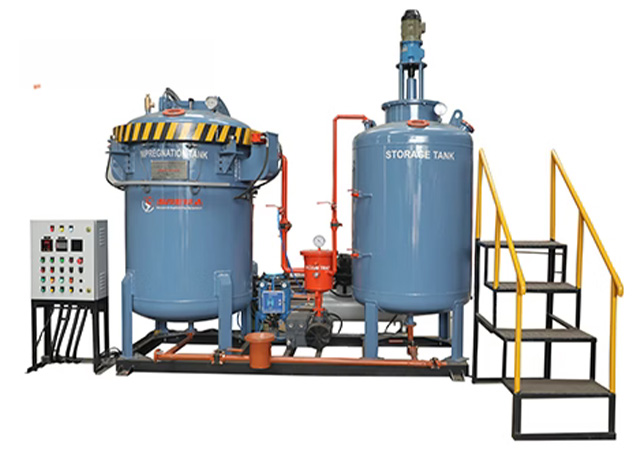
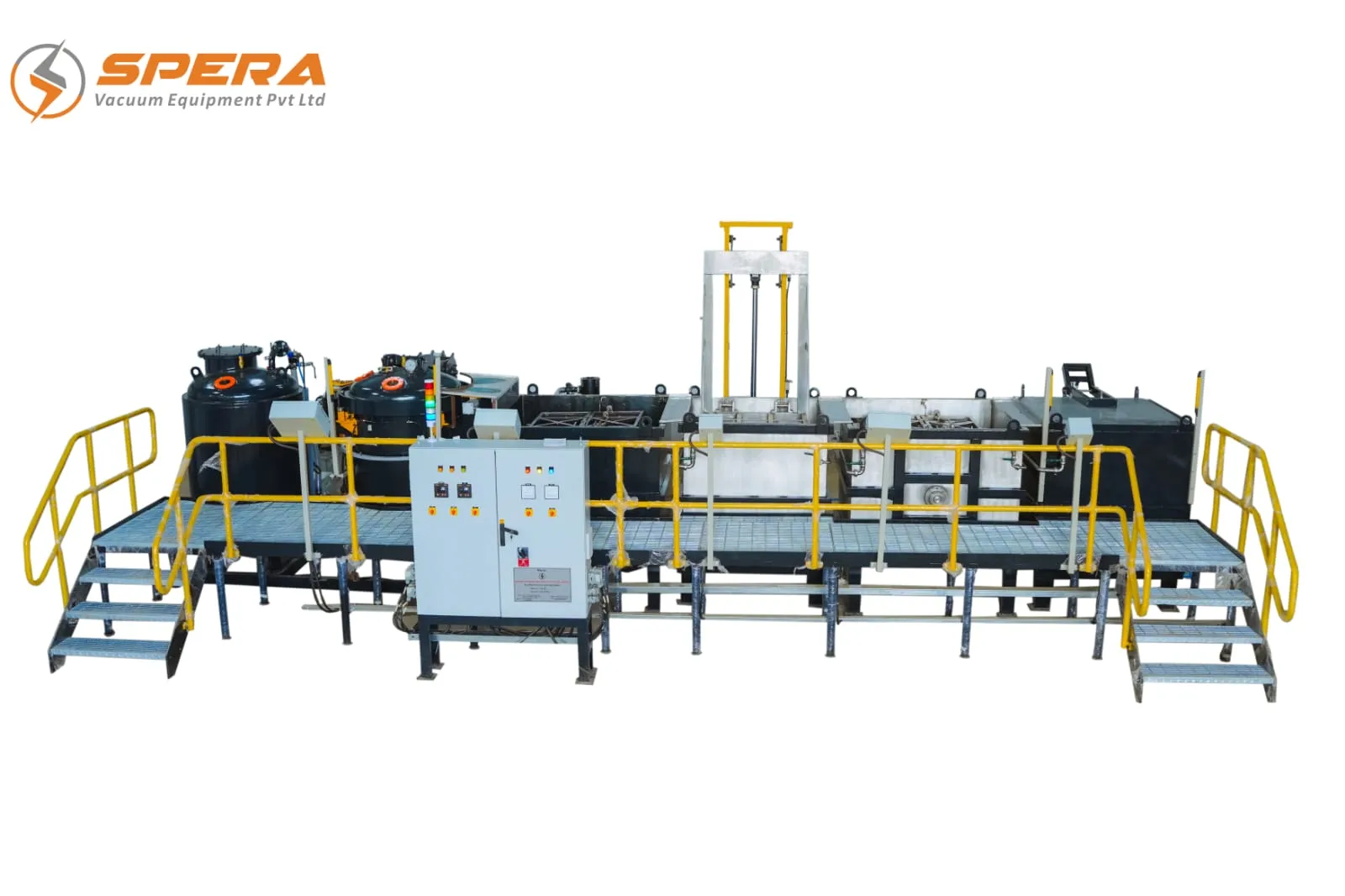
A Vacuum Pressure Impregnation Plant is an industrial system used to impregnate electrical windings and insulation components with varnish or resin under controlled vacuum and pressure conditions.
The basic process is straightforward.
First, air and moisture are removed from the insulation using vacuum. Once the available spaces have been evacuated, the insulating resin or varnish is introduced.
Pressure is then applied to help drive the impregnation material deeper into the insulation system.
Unlike a simple surface coating, VPI is designed to allow the insulating material to penetrate internal spaces within the winding.
Our VPI systems are designed for transformer coils, motors, stators, rotors, electrical windings and other insulation components.
The process can help improve:
- Dielectric strength
- Mechanical strength
- Thermal conductivity
- Moisture resistance
- Insulation reliability
- Equipment service life
Why Is Vacuum Pressure Impregnation Important?
Electrical windings can contain very small gaps between conductors, insulation layers and other components.
If these spaces contain air or moisture, they can become potential weak points in the insulation system.
Conventional varnish application may not always provide the same level of penetration throughout the winding.
VPI addresses this through two important stages.
The vacuum stage helps remove trapped air from the insulation.
The pressure stage then helps push resin or varnish further into the spaces created during the vacuum process.
This produces a more thoroughly impregnated winding with improved insulation integrity.
Our VPI process removes trapped air from insulation and fills the resulting voids with resin, supporting dielectric strength, mechanical stability and protection against moisture and contaminants.
What Problems Can Poor Impregnation Cause?
The quality of an insulation system can directly affect the reliability of electrical equipment.
When windings are not properly impregnated, several issues may become more likely.
Trapped Air
Air pockets can remain between insulation layers or inside winding structures, creating potential weak points in the insulation.
Moisture Penetration
Voids and gaps can provide pathways for moisture and contaminants to reach areas that should remain protected.
Poor Mechanical Stability
Windings experience electrical forces, vibration and thermal expansion during operation. Insufficient bonding can allow movement within the winding structure.
Reduced Heat Transfer
Air does not transfer heat as effectively as a properly impregnated insulation structure, which can affect thermal performance.
Insulation Failure Risk
Electrical stress, moisture, heat and mechanical movement can contribute to insulation deterioration over time.
Proper impregnation helps address some of these weaknesses by creating a more consolidated insulation system.
How Does the VPI Process Work?
The exact process parameters depend on the component, resin or varnish being used and the required insulation system.
However, a typical VPI process follows a controlled sequence.
Step 1 – Loading the Component
The transformer coil, stator, rotor, winding or other electrical component is placed inside the VPI chamber.
The chamber is then closed and prepared for the impregnation cycle.
Step 2 – Vacuum Drying
The first major stage involves creating a vacuum around the component.
This helps remove air and moisture from the insulation structure.
Our VPI Plant incorporates a high-efficiency vacuum drying chamber.
This drying stage is important because moisture can affect the quality of the final insulation system.
Step 3 – Creating a Deep Vacuum
The vacuum is maintained to remove trapped air from the winding.
The objective is to create space within the insulation structure for the impregnation material to enter.
Step 4 – Introducing Resin or Varnish
Once the required vacuum conditions have been achieved, the insulating material is introduced into the chamber.
Depending on the application, this may be varnish or resin.
Because air has already been removed, the impregnation material can enter spaces that would otherwise remain occupied by air.
Step 5 – Pressure Impregnation
After filling, pressure is applied according to the required process cycle.
This helps push the resin or varnish deeper into the winding and insulation system.
Controlled pressure cycles for uniform impregnation are one of the key features of our system.
Step 6 – Completion of the Impregnation Cycle
The component remains under the required process conditions until the impregnation cycle is complete.
The resin or varnish should have penetrated the insulation structure as required for the application.
Step 7 – Curing Preparation
After impregnation, the component can proceed to the appropriate curing or thermal treatment stage based on the resin or varnish system being used.
The result is a more consolidated insulation structure with improved bonding and protection.
Vacuum Impregnation vs. Vacuum Pressure Impregnation
The terms can sometimes be confusing because both processes use vacuum.
The key difference is what happens after the vacuum stage.
With a basic vacuum impregnation process, vacuum is used to remove air and help the impregnation material enter the insulation.
With Vacuum Pressure Impregnation, the process goes further by using controlled pressure to drive the resin or varnish deeper into the insulation structure.
| Feature | Vacuum Pressure Impregnation | Basic Vacuum Impregnation |
|---|---|---|
| Air removal | Yes | Yes |
| Vacuum cycle | Yes | Yes |
| Pressure cycle | Yes | May not be included |
| Resin penetration | Deep | Depends on process |
| Insulation bonding | High | Application dependent |
| Process control | Advanced | Varies |
| Large electrical windings | Suitable | Depends on system |
The appropriate process should depend on the winding design, insulation system and impregnation material.
What Components Can Be Processed in a VPI Plant?
One of the advantages of VPI technology is that the same basic process can be adapted for different types of electrical equipment.
Transformer Coils
Transformer coils can be impregnated with insulating varnish or resin to improve insulation integrity and mechanical bonding.
Transformer coil impregnation is one of the primary applications of our VPI systems.
Motor Stators
Electric motor stators are another major application.
Proper impregnation helps hold the winding system together while protecting the insulation.
Motor Rotors
Rotors can also be processed using VPI technology depending on their design and insulation requirements.
Generator Windings
Generator winding insulation can benefit from controlled impregnation to improve reliability under electrical, thermal and mechanical stresses.
Electrical Coils
Electrical coils used in different types of equipment can be treated using controlled varnish or resin impregnation.
High-Voltage Windings
High-voltage applications place greater demands on insulation performance, making thorough impregnation particularly important.
Repair and Refurbishment
VPI systems can also be used in repair and refurbishment environments where existing electrical components require insulation treatment.
Benefits of Vacuum Pressure Impregnation
The purpose of VPI is not simply to introduce resin into a winding. It is to create a more complete and consistent insulation system.
Higher Dielectric Strength
Proper impregnation can strengthen electrical insulation and reduce weak points created by air gaps.
Better Mechanical Bonding
Once the impregnation material cures within the winding structure, it can help hold individual components together and improve mechanical stability.
Improved Thermal Conductivity
A properly impregnated insulation system can provide better heat transfer compared with structures containing significant air gaps.
Better Moisture Resistance
Filling internal spaces with insulating material reduces areas where moisture and contaminants can accumulate.
Lower Insulation Failure Risk
A more thoroughly treated insulation system can reduce weaknesses associated with air pockets, moisture and poor bonding.
Longer Equipment Life
Better insulation protection and mechanical stability can contribute to longer equipment service life.
More Consistent Product Quality
Controlled vacuum and pressure cycles allow manufacturers to repeat the impregnation process across production batches.
Spera Vacuum identifies dielectric strength, moisture resistance, mechanical bonding, heat dissipation, reduced insulation failure risk, extended equipment life and improved reliability among the benefits of its VPI Plant.
Types of Vacuum Pressure Impregnation Plants
Not every manufacturer has the same production requirements.
A small operation producing specialized components may require a different level of automation than a high-volume motor or transformer manufacturer.
Spera Vacuum offers three main configurations.
Manual VPI Plant
Manual systems rely more heavily on operator control.
Lid clamping, valves and process cycles are operated manually.
This configuration can be useful for lower-volume production, specialized work or applications where operators need direct control over individual process stages.
Semi-Automatic VPI Plant
Semi-automatic systems combine manual and automated functions.
This provides a balance between operator involvement and automated process control.
It can be suitable for manufacturers looking for improved consistency and throughput without fully automating every stage.
Automatic VPI Plant
Automatic systems provide a higher level of process automation.
Spera Vacuum's automatic configuration includes automatic lid locking, pneumatic valves and PLC/HMI control.
This allows manufacturers to achieve more consistent and repeatable process cycles while reducing manual intervention.
Key Features of a VPI Plant
A VPI plant brings several systems together to manage the process from vacuum drying through resin filling and pressure impregnation.
Key features include:
Vacuum and Pressure System
The core of the process is the controlled combination of vacuum and pressure.
Both need to be managed according to the insulation system and production requirements.
Vacuum Drying Chamber
Before impregnation, the component needs to be properly prepared.
The vacuum drying chamber helps remove moisture and trapped air from the insulation.
Resin or Varnish Storage System
The impregnation material needs to be stored and transferred into the chamber in a controlled manner.
Spera Vacuum includes a resin storage and transfer system in its VPI Plant configuration.
Pressure Vessel
The plant uses a heavy-duty pressure vessel designed for the required process conditions.
PLC/HMI Control
For automated systems, PLC and HMI controls allow operators to monitor and manage the process.
Controlled Pressure Cycle
Pressure is applied in a controlled manner to support uniform penetration of the impregnation material.
Custom Chamber Sizes
Electrical components can vary significantly in size.
Spera Vacuum therefore offers customized chamber sizes and capacities for different applications.
Where Are VPI Plants Used?
VPI technology is particularly relevant wherever electrical insulation needs to withstand demanding operating conditions.
Transformer Manufacturing
Transformer manufacturers use VPI systems for treating coils and other insulation components.
Motor Manufacturing
Motor manufacturers use VPI to treat stator and rotor winding insulation.
Generator Manufacturing
Generator winding insulation can also be processed using vacuum pressure impregnation.
Electrical Equipment Manufacturing
Manufacturers of electrical coils and other winding-based equipment can use VPI to improve insulation performance.
High-Voltage Equipment
High-voltage winding systems require reliable insulation, making controlled impregnation an important manufacturing process.
Repair and Refurbishment
VPI can also be used when electrical equipment is being repaired or refurbished and the insulation system requires treatment.
VPI Plant vs. Conventional Varnish Treatment
The biggest difference is the level of penetration and process control.
A conventional varnish application may primarily treat accessible surfaces of a winding.
VPI uses vacuum to remove air from the insulation structure and pressure to help drive the impregnation material into those spaces.
| Feature | VPI Plant | Conventional Varnish Treatment |
|---|---|---|
| Air removal | Vacuum-assisted | Usually limited |
| Resin penetration | Deep | May be more surface-focused |
| Pressure impregnation | Yes | Usually not |
| Process control | High | Depends on process |
| Insulation bonding | Strong | Depends on application |
| Moisture protection | Improved | Depends on coating |
| Repeatability | High with automated systems | Can vary |
For applications where complete and consistent impregnation is important, VPI provides a more controlled process.
How to Choose the Right VPI Plant
Selecting a VPI plant is not simply a matter of choosing the largest chamber.
The system should be matched to the components being processed and the production requirements.
Component Dimensions
The largest component that needs to be processed will have a major influence on the required chamber size.
Production Volume
A manufacturer processing a few specialized components will have different requirements from a high-volume motor or transformer manufacturer.
This is where the choice between manual, semi-automatic and automatic configurations becomes important.
Resin or Varnish System
The impregnation material being used influences process requirements, including filling, pressure and curing.
Vacuum Requirements
The vacuum system needs to be capable of properly preparing the insulation before impregnation.
Pressure Requirements
The pressure system needs to provide the appropriate conditions for the impregnation material to penetrate the winding.
Automation
If repeatability and production efficiency are priorities, PLC/HMI-based automation can provide greater process control.
Chamber Configuration
The chamber should provide sufficient space for the component while maintaining a practical loading and unloading arrangement.
Spera Vacuum offers customized chamber sizes, capacities and automation options for its VPI systems.
Comparing suppliers? See the Vacuum Pressure Impregnation Plant product page for features, configurations and customization options, or talk to our engineers about your application.
Why Choose Spera Vacuum for a VPI Plant?
Spera Vacuum Equipment Pvt. Ltd. provides vacuum, drying, oil-treatment and impregnation equipment for transformer and electrical equipment manufacturers.
For VPI applications, its product range includes:
- Manual VPI Plants
- Semi-Automatic VPI Plants
- Automatic VPI Plants
- Custom chamber sizes
- Custom capacities
- PLC/HMI automation options
- Vacuum drying systems
- Resin storage and transfer systems
- Heavy-duty pressure vessel construction
- Controlled vacuum and pressure cycles
We also provide long-term service support and customized solutions for transformer and electrical equipment manufacturers.
Frequently Asked Questions
What is a Vacuum Pressure Impregnation Plant?
A Vacuum Pressure Impregnation Plant is an industrial system used to impregnate electrical windings and insulation components with resin or varnish under controlled vacuum and pressure.
Why is VPI used for electrical windings?
VPI helps remove trapped air from insulation and allows resin or varnish to penetrate the resulting spaces. This can improve dielectric strength, mechanical bonding, moisture resistance and overall insulation reliability.
What equipment can be processed in a VPI Plant?
VPI plants can be used for transformer coils, motor stators, rotors, generator windings, electrical coils, high-voltage windings and other electrical insulation systems.
What is the difference between vacuum impregnation and VPI?
Both processes use vacuum to remove air from the insulation. VPI additionally uses a controlled pressure cycle to help drive the resin or varnish deeper into the insulation structure.
What types of VPI Plants are available?
Spera Vacuum offers manual, semi-automatic and automatic VPI Plants, allowing manufacturers to select a configuration based on production volume and desired level of automation.
Is PLC/HMI control available?
Yes. Automatic VPI Plants from Spera Vacuum use PLC/HMI-based control for process automation and repeatability.
Can the VPI chamber be customized?
Yes. Custom chamber sizes and capacities are available according to application requirements.
What are the main benefits of VPI?
The process can improve dielectric strength, mechanical bonding, thermal conductivity and moisture resistance while reducing insulation failure risk and supporting longer equipment life.
Conclusion
Electrical insulation has to withstand much more than voltage.
During operation, windings can experience heat, vibration, mechanical forces, moisture and electrical stress. If weak points exist within the insulation system, these conditions can gradually affect equipment reliability.
Vacuum Pressure Impregnation provides a controlled way to address one of these weaknesses: air and voids within the insulation.
By combining vacuum drying, controlled resin or varnish filling and pressure impregnation, the process allows the impregnation material to reach deeper into the winding structure and create a more consolidated insulation system.
For transformer coils, motors, generators and other electrical windings, this can support better dielectric performance, improved mechanical bonding, greater moisture resistance and longer equipment life.
The right VPI system depends on component size, production volume, impregnation material, required process conditions and the desired level of automation.
Spera Vacuum Equipment Pvt. Ltd. provides manual, semi-automatic and automatic VPI solutions with customized chamber sizes and capacities.
Looking for a Vacuum Pressure Impregnation Plant?
If you are looking for a VPI system for transformer coils, motors, generators or electrical winding insulation, explore the Spera Vacuum Pressure Impregnation Plant.
For other transformer and electrical equipment solutions, visit the Spera Vacuum official website.
Recent Posts
Contact
Have a project in mind? Contact Us
From oil purification and evacuation systems to VPI and drying plants, our team delivers reliable, high-performance solutions tailored to your industrial requirements.
Opening Hours
Mon - Sat
09 AM - 07 PM
Get in Touch
Our skilled engineering team is ready to assist you with any inquiries.