

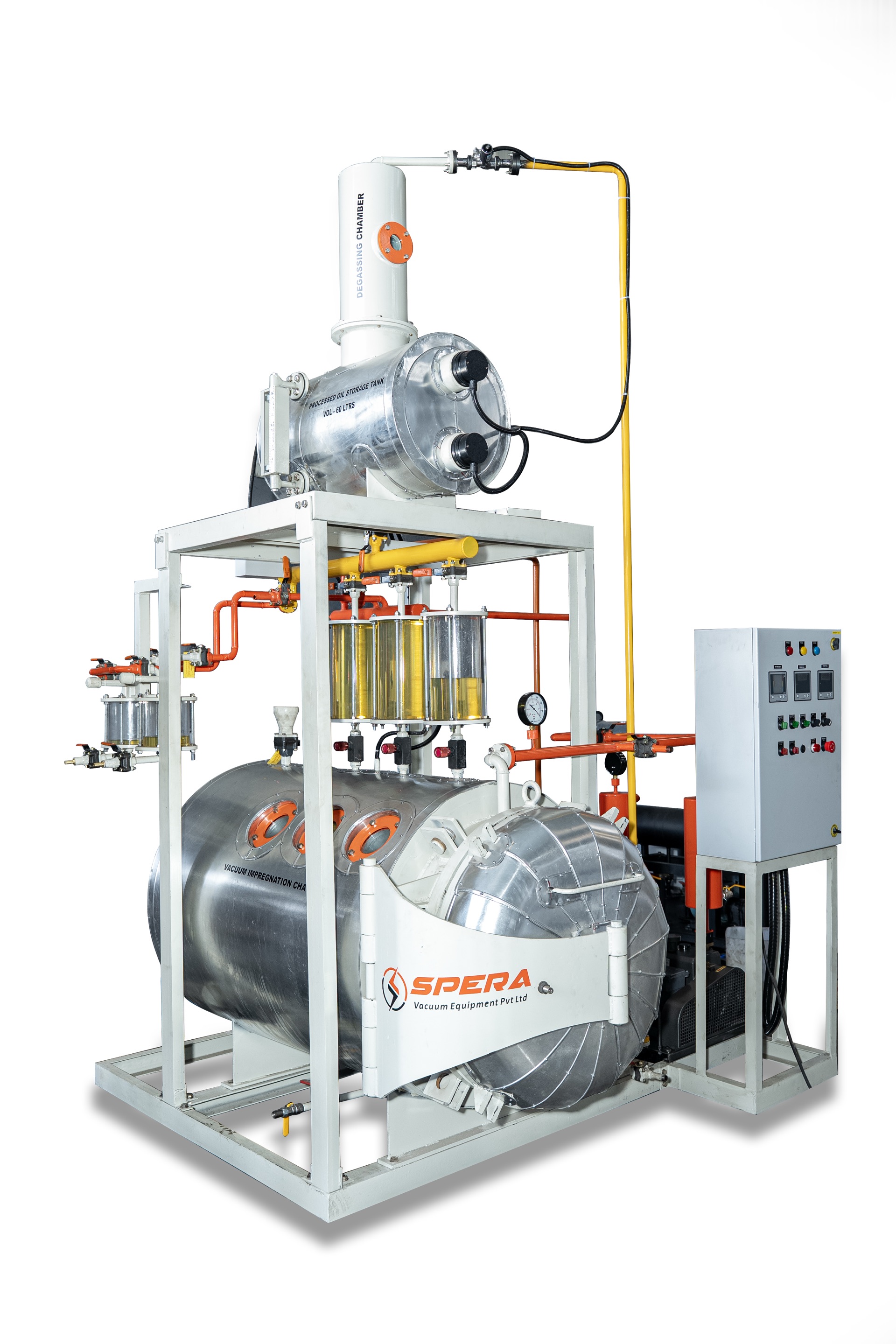
Oil Impregnation Plant: A Complete Guide to Vacuum-Assisted Oil Impregnation
Oil Impregnation Plant: Why Controlled Oil Impregnation Matters
Many industrial components may look solid and finished from the outside, while their internal structure contains tiny pores, air pockets or spaces that need to be properly filled before the component is ready for service.
In electrical applications, trapped air and moisture can affect insulation performance. In porous mechanical components such as sintered products and self-lubricating bearings, oil needs to penetrate the internal pores to provide the required lubrication.
This is where an Oil Impregnation Plant becomes useful.
An oil impregnation system uses vacuum, controlled oil handling and a defined impregnation cycle to help oil penetrate deeply into porous materials and insulation structures.
By removing trapped air and moisture before oil filling, the process allows more uniform oil penetration and can help improve the performance and reliability of the finished component.
Spera Vacuum Equipment Pvt. Ltd., based in Pune, manufactures oil impregnation systems for transformer windings, capacitors, coils, bushings, insulation materials, sintered products and self-lubricating bearings.
What Is an Oil Impregnation Plant?
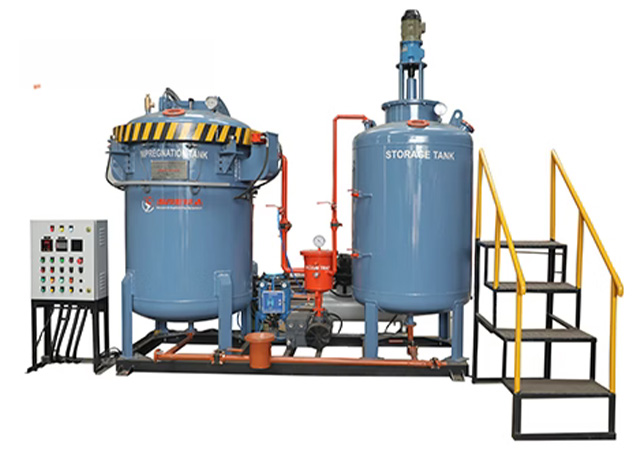
An Oil Impregnation Plant is an industrial system designed to impregnate porous components with oil under controlled vacuum conditions.
The process is based on a simple principle.
First, air and moisture are removed from the pores or insulation structure using vacuum. Oil is then introduced under controlled conditions so it can penetrate spaces that may otherwise remain filled with air.
For electrical components, this helps create a more uniform insulating system.
For porous mechanical components such as sintered products and self-lubricating bearings, oil can penetrate the internal pore structure and provide the required lubrication.
Ours is a vacuum-assisted oil impregnation plant with controlled oil filling technology for electrical and industrial applications.
Why Is Oil Impregnation Important?
The purpose of impregnation depends on the component being processed.
For electrical insulation, the main concerns are usually trapped air, moisture and incomplete oil penetration. These factors can affect dielectric performance and insulation reliability.
For sintered products and self-lubricating bearings, the requirement is different. Oil needs to penetrate the interconnected pores of the material so the component can retain and release oil during operation.
Without proper impregnation, the internal structure may not be fully utilized.
For electrical components, this can affect insulation reliability. For porous mechanical components, incomplete oil penetration can affect lubrication performance.
This is why impregnation needs to be treated as a controlled process rather than simply an oil-filling operation.
How Does an Oil Impregnation Plant Work?
The exact cycle depends on the component, material and application, but the basic process follows several important stages.
Step 1 – Loading the Components
The components are placed inside the impregnation chamber.
The chamber configuration and capacity depend on the size, shape and quantity of components being processed.
For electrical applications, this could involve:
- Transformer windings
- Coils
- Bushings
- Capacitors
- Insulation assemblies
For industrial applications, it may involve:
- Sintered components
- Self-lubricating bearings
- Other porous products
Step 2 – Applying Vacuum
A vacuum is applied inside the chamber.
This helps remove trapped air and moisture from the pores of the material or from the insulation structure.
Removing the air first is important because it creates space for the oil to enter.
Step 3 – Oil Introduction
Once the required vacuum conditions are established, the insulating or lubricating oil is introduced into the system.
The controlled filling arrangement helps the oil reach the internal spaces of the component.
Step 4 – Oil Penetration
The oil penetrates the porous structure under the controlled conditions of the impregnation cycle.
For electrical insulation, the objective is deep and uniform oil absorption through materials such as paper and pressboard.
For sintered components and bearings, the objective is to fill the internal pore structure with oil.
Step 5 – Oil Handling and Filtration
The plant includes oil storage, transfer and filtration arrangements for managing the impregnation oil.
Controlled oil heating and circulation can also be incorporated into the system.
This allows the complete impregnation process to be managed through an integrated setup.
Oil Impregnation for Electrical Components
One of the major applications of the system is electrical insulation treatment.
Transformer windings, coils, bushings, capacitors and insulation assemblies can contain porous materials that need to be properly impregnated.
When vacuum is used to remove trapped air and moisture before oil penetration, the oil can reach deeper into the insulation structure.
Our Oil Impregnation Plant is intended for medium- and high-voltage electrical applications where insulation integrity is important.
Transformer Windings
Transformer winding insulation needs to maintain reliable dielectric performance throughout operation.
Vacuum oil impregnation helps remove trapped air and moisture and allows insulating oil to penetrate the winding insulation structure.
Capacitors
Capacitor components can require controlled oil filling and impregnation as part of their insulation treatment.
Capacitor oil filling and impregnation is one of the applications of our system.
Coils and Bushings
Coils and bushings can require oil impregnation to support insulation treatment and reliability.
Paper and Pressboard Insulation
Paper and pressboard are porous insulation materials.
Vacuum-assisted impregnation helps oil penetrate their internal structure rather than simply remaining on the surface.
Oil Impregnation for Sintered Products
Oil impregnation also has an important application outside electrical insulation.
Sintered components are manufactured from metal powders that are compressed and processed to form components with controlled porous structures.
These pores can be used to hold oil.
During vacuum impregnation, air is removed from the pore structure and replaced with oil. This allows the component to function as an oil-impregnated part during operation.
Spera Vacuum specifically identifies sintered products and self-lubricating bearings as applications where oil needs to penetrate the internal component structure.
Self-Lubricating Bearings
Self-lubricating bearings rely on oil stored within their porous structure.
The effectiveness of the process depends on getting the oil into the internal pores rather than leaving significant areas untreated.
Vacuum impregnation provides a controlled way to facilitate this penetration.
Key Features of an Oil Impregnation Plant
A modern system combines vacuum technology with controlled oil handling and process automation.
Key features of the Spera Vacuum Oil Impregnation Plant include:
- Advanced vacuum oil impregnation system
- Deep penetration of insulating oil
- Effective removal of trapped air and moisture
- Controlled oil heating and circulation
- High-vacuum impregnation chamber
- PLC/HMI-based automatic control
- Oil storage, transfer and filtration arrangement
- Heavy-duty chamber and piping construction
- Energy-efficient and low-maintenance design
- Customized chamber sizes and capacities
The ability to customize chamber dimensions is particularly useful because the equipment requirements can be very different for a transformer winding, a batch of sintered components and a set of self-lubricating bearings.
Benefits of Vacuum Oil Impregnation
The benefits depend on the application, but several advantages are common across the process.
Better Oil Penetration
Vacuum helps remove air from internal spaces, giving the oil a better opportunity to penetrate the component.
Reduced Trapped Air and Moisture
Removing unwanted air and moisture is particularly important in electrical insulation applications.
Improved Dielectric Strength
For electrical components, proper oil impregnation can support dielectric performance by creating a more uniform insulation structure.
Better Insulation Reliability
Deep and uniform oil penetration helps improve the consistency of insulation treatment.
Improved Thermal Performance
Improved thermal conductivity is another benefit of our oil impregnation process.
Reduced Failure Risk
Better impregnation and removal of moisture and air can help reduce risks associated with poor insulation treatment.
Extended Equipment Life
Improved insulation reliability and component performance can contribute to longer service life.
Consistent Production Quality
Controlled vacuum, oil handling and automation can help manufacturers achieve more repeatable impregnation results.
Manual vs. Automated Oil Impregnation
The required level of automation depends on the production environment.
For smaller or specialized operations, a manually managed process may be practical.
For manufacturers processing components repeatedly, automated control can make the process more consistent.
Spera Vacuum can equip its Oil Impregnation Plant with PLC/HMI-based automatic control, allowing the process sequence and operating conditions to be managed through a centralized control system.
| Manual Process | Automated Impregnation Plant |
|---|---|
| Greater operator involvement | Centralized process control |
| Manual process sequencing | Controlled automatic sequence |
| More variation between batches | More repeatable processing |
| Limited process monitoring | PLC/HMI-based monitoring |
| More difficult to scale | Better suited to production environments |
Automation does not replace the need for process engineering. Instead, it helps make a defined process easier to repeat consistently.
Applications of an Oil Impregnation Plant
The technology can be used across both electrical and industrial manufacturing applications.
Electrical Applications
- Transformer winding impregnation
- Capacitor oil filling and impregnation
- Coil insulation treatment
- Bushing insulation treatment
- Paper insulation impregnation
- Pressboard insulation impregnation
- High-voltage insulation processing
- Electrical component manufacturing
Industrial Applications
- Sintered products
- Self-lubricating bearings
- Porous components requiring oil penetration
- Repair and refurbishment applications
These applications are based on the uses listed by Spera Vacuum for its Oil Impregnation Plant.
Oil Impregnation vs. Conventional Oil Filling
Oil filling and oil impregnation are not necessarily the same process.
Simply filling a component with oil does not guarantee that the oil has reached every internal pore or insulation space.
| Feature | Conventional Oil Filling | Vacuum Oil Impregnation |
|---|---|---|
| Primary focus | Introducing oil | Deeper oil penetration |
| Air inside pores | Can remain | Vacuum helps remove it |
| Moisture removal | May be limited | Vacuum helps remove moisture |
| Internal penetration | Less controlled | Controlled impregnation process |
| Porous structures | Application dependent | Designed for porous materials and insulation |
| Process control | Depends on setup | Vacuum and oil cycle controlled |
For components where internal oil penetration is important, vacuum-assisted impregnation provides a more controlled approach.
How to Choose an Oil Impregnation Plant
The system should be selected according to the component rather than simply by choosing a standard chamber size.
Component Type
A transformer winding has very different requirements from a sintered bearing or capacitor.
Component Dimensions
The size and geometry of the component determine the required chamber dimensions and loading arrangement.
Production Quantity
Batch size and expected production volume influence chamber capacity and process configuration.
Oil Requirements
The type of oil, heating requirements, filtration and circulation arrangement need to match the application.
Vacuum Requirements
The vacuum system should be suitable for removing air and moisture from the specific component structure.
Automation
Manufacturers looking for repeatable production can consider PLC/HMI-based automation.
Customization
Because applications vary considerably, customized chamber sizes and capacities can be useful.
Customized chamber sizes and capacities are available for our Oil Impregnation Plant.
Comparing suppliers? See the Oil Impregnation Plant product page for features, configurations and customization options, or talk to our engineers about your application.
Why Choose Spera Vacuum for Oil Impregnation?
Spera Vacuum Equipment Pvt. Ltd. manufactures vacuum, drying, oil-treatment and impregnation systems for industrial applications.
Its Oil Impregnation Plant combines several important processes into one integrated system:
- Vacuum impregnation
- Controlled oil heating
- Oil circulation
- Oil storage
- Oil transfer
- Oil filtration
- PLC/HMI process control
- Customized chamber sizes
- Customized capacities
The system can be configured for electrical applications such as transformer windings, capacitors, coils and bushings, as well as industrial applications involving sintered products and self-lubricating bearings.
Spera Vacuum also provides engineering, manufacturing, installation, commissioning and service support for its industrial systems.
Frequently Asked Questions
What is an Oil Impregnation Plant?
An Oil Impregnation Plant is an industrial system that uses vacuum and controlled oil filling to impregnate porous components or electrical insulation with oil.
It helps remove trapped air and moisture and promotes deeper oil penetration.
Why is vacuum used in oil impregnation?
Vacuum helps remove air and moisture from pores and insulation structures before oil is introduced. This creates better conditions for the oil to penetrate the internal structure.
What components can be processed in an Oil Impregnation Plant?
The plant can be used for transformer windings, capacitors, bushings, coils, paper and pressboard insulation, sintered products, self-lubricating bearings and other suitable electrical or porous components.
Is oil impregnation only used for electrical components?
No. Spera Vacuum also identifies sintered products and self-lubricating bearings as applications where oil needs to penetrate the internal component structure.
Can the plant be automated?
Yes. Spera Vacuum offers PLC/HMI-based automatic control as a feature of its Oil Impregnation Plant.
Can the chamber size be customized?
Yes. Custom chamber sizes and capacities are available.
What are the main benefits of vacuum oil impregnation?
The process can help remove trapped air and moisture, improve oil penetration, support dielectric performance and insulation reliability, improve thermal performance, reduce failure risks and improve production consistency.
Conclusion
Oil impregnation is ultimately about what happens inside a component.
Whether the application involves transformer insulation, capacitors, coils, bushings, paper and pressboard, or porous sintered components, the objective is to get the oil where it is actually needed.
Vacuum-assisted impregnation helps by first removing trapped air and moisture and then allowing oil to penetrate deeper into the component structure.
For electrical applications, this can support insulation performance and reliability. For sintered products and self-lubricating bearings, it provides a controlled way of filling the internal pore structure with oil.
The right system depends on the component, material, oil, production volume, chamber requirements and desired level of automation.
Spera Vacuum Equipment Pvt. Ltd. provides configurable oil impregnation systems with customized chamber sizes and capacities.
Looking for an Oil Impregnation Plant?
If you manufacture transformer components, capacitors, coils, bushings, sintered products, self-lubricating bearings or other porous components requiring controlled oil impregnation, explore the Spera Vacuum Oil Impregnation Plant.
For other transformer, electrical and industrial equipment solutions, visit the Spera Vacuum official website.
Recent Posts
Contact
Have a project in mind? Contact Us
From oil purification and evacuation systems to VPI and drying plants, our team delivers reliable, high-performance solutions tailored to your industrial requirements.
Opening Hours
Mon - Sat
09 AM - 07 PM
Get in Touch
Our skilled engineering team is ready to assist you with any inquiries.