

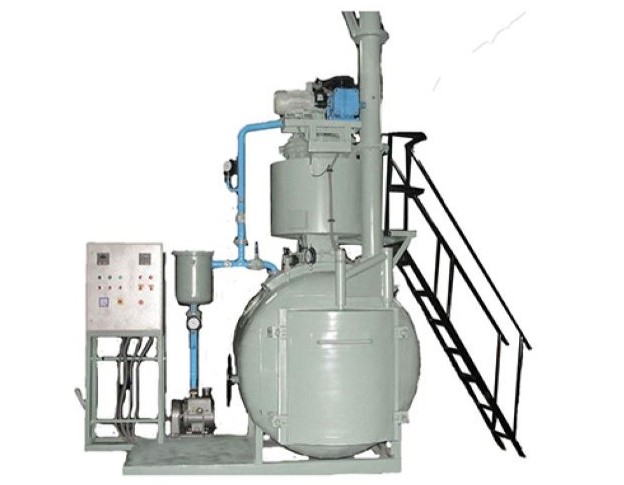
Epoxy Mixing Plant: Controlled Resin Mixing for Electrical & Industrial Applications
When epoxy resin is used for electrical insulation, transformer casting, potting, or encapsulation, the final quality depends on much more than the resin itself.
The resin and hardener need to be combined in the correct proportion, mixed uniformly, and processed under controlled conditions. Air bubbles and moisture also need to be minimized, while temperature can influence resin viscosity and processing behaviour.
This is where an Epoxy Mixing Plant becomes an important part of the manufacturing process.
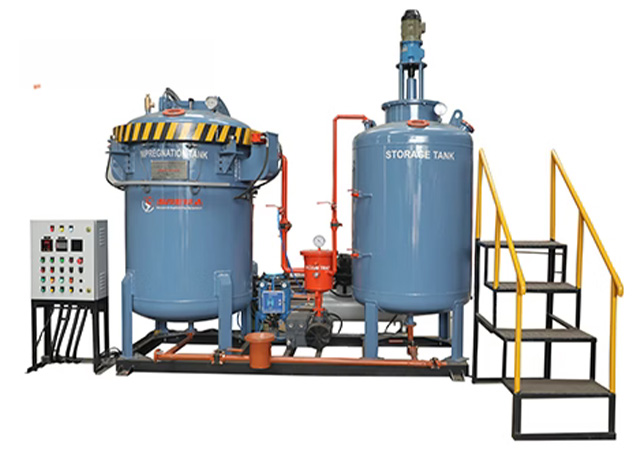
An industrial epoxy mixing system is designed to accurately dose, mix, degas, heat, and dispense epoxy resin and hardener under controlled conditions. By bringing these operations together, manufacturers can achieve a more consistent material preparation process for electrical and industrial applications.
Spera Vacuum Equipment Pvt. Ltd. designs Epoxy Mixing Plants for applications including dry-type transformer coil casting, electrical insulation casting, CT/PT resin casting, bushing manufacturing, potting, encapsulation, and industrial sealing and bonding.
What Is an Epoxy Mixing Plant?
An Epoxy Mixing Plant is an industrial system used to prepare epoxy resin and hardener before they are used for casting, insulation, potting, encapsulation, or bonding.
Unlike basic manual mixing, an industrial system can manage several important stages of the process, including:
- Resin and hardener dosing
- Mixing ratio control
- Controlled mixing
- Vacuum degassing
- Resin temperature control
- Storage and transfer
- Dispensing
- Process sequencing
The goal is to produce a homogeneous mixture with minimal trapped air and consistent processing conditions.
For manufacturers working with electrical insulation and cast-resin components, this level of process control can help reduce variation between batches and improve production consistency.
Why Is Controlled Epoxy Mixing Important?
Epoxy systems generally consist of two or more components that need to be combined according to a specified ratio.
If the ratio is inconsistent, the cured material may not achieve the intended properties. Similarly, air trapped during mixing can remain inside the material as bubbles or voids.
This is particularly important in electrical insulation applications.
An internal void is not simply a visual imperfection. Depending on the application, it can affect dielectric performance, mechanical properties, and long-term reliability.
That is why industrial epoxy processing focuses on three fundamental requirements:
Accurate proportioning.
The resin and hardener must be supplied in the required ratio.
Thorough mixing.
The components need to be combined into a uniform mixture.
Effective degassing.
Entrapped air and moisture need to be reduced before the material is applied.
The Epoxy Mixing Plant from Spera Vacuum combines these process requirements with temperature-controlled resin heating and automated process control.
What Problems Can Poor Epoxy Processing Cause?
The exact effects depend on the resin system and application, but inconsistent processing may contribute to:
- Air bubbles within the resin
- Internal voids
- Inconsistent curing
- Uneven material properties
- Poor mechanical bonding
- Reduced insulation reliability
- Higher product rejection
For transformer and electrical equipment manufacturers, consistency is especially important because epoxy often becomes part of the component's insulation system.
A controlled preparation and dispensing process can help reduce variations between production cycles.
How Does an Epoxy Mixing Plant Work?
The exact process can vary depending on the resin system, component size, production volume, and plant configuration. However, the basic operation generally follows a structured sequence.
1. Resin and Hardener Storage
The resin and hardener are stored in dedicated tanks within the system.
Spera Vacuum's configuration includes stainless-steel mixing and storage tanks. Controlled storage helps maintain an organized supply of each component throughout production.
2. Accurate Dosing
The required quantity of resin and hardener is metered according to the specified mixing ratio.
This is one of the most important stages because the properties of the cured epoxy depend heavily on the correct proportion of its components.
The system incorporates precision resin and hardener dosing with mixing-ratio control.
3. Controlled Mixing
The resin and hardener are then combined and mixed to produce a homogeneous material.
The objective is not simply to combine the two liquids, but to ensure that the resulting mixture is consistent throughout the batch.
4. Vacuum Degassing
Air can become trapped inside epoxy during mixing.
Vacuum degassing helps remove entrapped air bubbles and moisture from the mixture before dispensing. This is particularly useful for electrical insulation applications where internal voids can affect the finished component.
Vacuum treatment is therefore an important part of maintaining the quality of the prepared resin system.
5. Temperature Control
Temperature can influence epoxy viscosity and processing behaviour.
A controlled heating arrangement helps maintain the resin within the intended processing conditions, making mixing, transfer, and dispensing easier to manage.
The required temperature depends on the specific resin and hardener system and should be established according to the material manufacturer's recommendations.
6. Dispensing
Once the material has been mixed and degassed, it can be transferred and dispensed for the required application.
Depending on the manufacturing process, the prepared epoxy may be used for transformer coils, electrical insulation components, bushings, CT/PT components, or other parts requiring casting or encapsulation.
Why Is Vacuum Degassing Important?
Vacuum degassing is one of the key stages in industrial epoxy preparation.
During conventional mixing, air can become trapped inside the resin. If this air remains in the material, it can form bubbles or internal voids after processing.
Vacuum creates conditions that help remove this entrapped air and moisture before the material is applied.
This is especially relevant to electrical insulation, where minimizing internal voids can help maintain more consistent insulation properties.
By combining mixing with vacuum treatment, the process can provide better control than conventional open-air preparation.
Why Does Temperature Control Matter?
Epoxy does not behave identically at every temperature.
Temperature can influence viscosity, flow characteristics, mixing behaviour, and dispensing. For this reason, resin heating can be an important part of the overall process.
The Epoxy Mixing Plant includes a temperature-controlled resin heating system, allowing the material to be processed under controlled thermal conditions.
The actual temperature settings should always be determined according to the resin manufacturer's recommended processing conditions rather than using a universal temperature.
Applications of an Epoxy Mixing Plant
Epoxy mixing systems are used across a range of electrical and industrial manufacturing applications.
Dry-Type Transformer Coil Casting
One of the major applications is casting dry-type transformer coils.
The epoxy becomes part of the insulation system surrounding the winding, making consistent mixing, degassing, and processing important to the casting process.
Electrical Insulation Casting
Electrical insulation components can be cast or encapsulated using epoxy resin systems. The mixing plant helps prepare the resin consistently before application.
CT and PT Resin Casting
Current transformers (CTs) and potential transformers (PTs) can use resin casting as part of their insulation and protection system.
Bushing Manufacturing
Controlled epoxy processing can also be used in bushing manufacturing, where the resin contributes to insulation and component construction.
Potting and Encapsulation
Electronic and electrical components can be encapsulated using epoxy to provide insulation and physical protection.
Insulator Production
Epoxy systems can also be used in the production of electrical insulators where controlled resin preparation is required.
Industrial Sealing and Bonding
Beyond electrical applications, epoxy can be used for industrial component sealing and bonding where controlled mixing and consistent curing are important.
Key Features of Spera Vacuum's Epoxy Mixing Plant
The system brings multiple resin-processing functions together rather than depending entirely on separate manual operations.
Key features include:
- Precision epoxy resin and hardener dosing
- Accurate mixing-ratio control
- Vacuum degassing
- Temperature-controlled resin heating
- Homogeneous mixing
- PLC/HMI-based automatic control
- Batch or continuous operation
- Stainless-steel mixing and storage tanks
- Low-maintenance and energy-efficient design
- Customized capacities and automation options
These features allow the plant to be configured according to different production requirements.
Batch vs. Continuous Epoxy Processing
Not every manufacturer has the same production requirements.
Some applications involve individual batches prepared for specific components, while high-volume manufacturing may require a more continuous production arrangement.
Spera Vacuum's Epoxy Mixing Plant can be configured for both batch and continuous process operation.
The appropriate configuration depends on factors such as:
- Production volume
- Component dimensions
- Resin system
- Required batch size
- Process sequence
- Dispensing requirements
For specialized or lower-volume production, batch processing may be appropriate. Higher-volume manufacturing may benefit from a more automated and continuous arrangement.
Manual Mixing vs. Industrial Epoxy Mixing
Manual mixing can be practical for small-scale or laboratory applications. However, maintaining the same level of consistency becomes more difficult as production volumes increase.
| Manual Epoxy Mixing | Industrial Epoxy Mixing Plant |
|---|---|
| Manual measurement | Controlled dosing |
| Mixing ratio depends on operator accuracy | Automated ratio control |
| Air may remain trapped | Vacuum degassing |
| Limited temperature control | Controlled resin heating |
| Greater batch-to-batch variation | More consistent processing |
| Limited scalability | Batch or continuous production |
The objective of an industrial system is not simply to automate mixing. It is to make the complete resin preparation process more repeatable, controlled, and suitable for production environments.
Benefits of Using an Epoxy Mixing Plant
Consistent Mixing Ratio
Accurate dosing of resin and hardener helps maintain the intended mixture ratio throughout production.
Fewer Air Bubbles and Voids
Vacuum degassing helps remove entrapped air from the epoxy mixture before application.
Better Dielectric Performance
For electrical insulation applications, controlled mixing and degassing can contribute to more consistent dielectric properties.
Better Mechanical Bonding
A properly processed epoxy system can provide consistent bonding between the resin and the component.
More Consistent Curing
Maintaining the correct component ratio and processing conditions can help improve curing consistency.
Reduced Product Rejection
Better process control can help reduce issues caused by inconsistent mixing, trapped air, or unsuitable processing conditions.
Improved Product Reliability
Consistent epoxy preparation contributes to the overall reliability and service performance of the finished component.
Why PLC/HMI Control Matters
Once epoxy preparation becomes part of a production line, repeatability becomes increasingly important.
Operators may need to manage dosing, mixing, vacuum degassing, heating, and dispensing in a defined sequence.
A PLC/HMI-based control system provides a centralized method for managing these operations.
Spera Vacuum offers PLC/HMI-based automatic control, with configurations ranging from semi-automatic to fully automatic operation.
This can be particularly useful for manufacturers looking to maintain consistent processing across repeated production cycles.
How to Choose an Epoxy Mixing Plant
The right system depends on the manufacturing application rather than simply selecting the largest available machine.
Resin System
The type of epoxy resin and hardener should be considered when designing the mixing, storage, heating, and dispensing system.
Mixing Ratio
The plant should accurately handle the required resin-to-hardener ratio specified for the material.
Production Volume
Required batch size and daily production volume influence tank capacity and overall system configuration.
Component Size
Large transformer coils and smaller electrical components can require different dispensing arrangements.
Degassing Requirements
The required vacuum degassing process depends on the resin system and application.
Temperature Requirements
The resin manufacturer's recommended processing conditions should be considered when defining the heating and temperature-control system.
Automation Level
Semi-automatic and fully automatic configurations can be selected according to production volume and desired process control.
Batch or Continuous Operation
Manufacturers should determine whether their process requires batch preparation or continuous operation.
Spera Vacuum offers customized capacities and automation options to suit different manufacturing requirements.
Comparing suppliers? See the Epoxy Mixing Plant product page for features, configurations and customization options, or talk to our engineers about your application.
Why Choose Spera Vacuum?
Spera Vacuum Equipment Pvt. Ltd. manufactures industrial vacuum, drying, oil treatment, and impregnation equipment from its facility in Pune, India.
For epoxy processing, its system brings together resin and hardener dosing, mixing, vacuum degassing, temperature-controlled heating, storage, and dispensing.
The company also offers customized plant capacities and automation options, allowing the equipment to be configured according to the manufacturing process.
This makes the system suitable for manufacturers working with dry-type transformers, electrical insulation components, CT/PT assemblies, bushings, insulators, and other epoxy-based applications.
Frequently Asked Questions
What is an Epoxy Mixing Plant?
An Epoxy Mixing Plant is an industrial system used to accurately dose, mix, degas, heat, and dispense epoxy resin and hardener for applications such as electrical insulation, transformer casting, potting, encapsulation, and industrial bonding.
Why is vacuum degassing used in epoxy mixing?
Vacuum degassing helps remove trapped air bubbles and moisture from the epoxy mixture. This is especially important in electrical insulation applications where internal voids can affect insulation performance.
Where are Epoxy Mixing Plants used?
They can be used for dry-type transformer coil casting, electrical insulation casting, CT/PT resin casting, bushing manufacturing, potting and encapsulation, insulator production, and industrial sealing and bonding.
Can the mixing ratio be controlled?
Yes. The system includes precision resin and hardener dosing with mixing-ratio control.
Can an Epoxy Mixing Plant be automated?
Yes. PLC/HMI-based automatic control can be incorporated, with configurations ranging from semi-automatic to fully automatic operation.
Can it operate continuously?
Yes. The system can be configured for both continuous and batch process operation.
Can the plant be customized?
Yes. Capacities and automation options can be customized according to the application and production requirements.
Conclusion
When epoxy is used for electrical insulation, transformer casting, potting, encapsulation, or industrial bonding, the mixing stage deserves as much attention as the final application.
The resin and hardener need to be dosed correctly, the mixture needs to remain homogeneous, air and moisture need to be controlled, and the resin needs to be processed under suitable temperature conditions.
An Epoxy Mixing Plant brings these operations together in a controlled industrial system.
For transformer manufacturers, electrical equipment manufacturers, cast-resin transformer producers, and other industries using epoxy, a controlled preparation system can make the resin processing stage more consistent and easier to manage.
Spera Vacuum's Epoxy Mixing Plant combines precision dosing, controlled mixing, vacuum degassing, temperature-controlled heating, PLC/HMI automation, and batch or continuous operation in a configurable system.
Looking for an Epoxy Mixing Plant?
If you manufacture dry-type transformers, electrical insulation components, CT/PT assemblies, bushings, insulators, or other epoxy-cast products, discuss your resin system, production volume, automation requirements, and application with Spera Vacuum.
Explore the Epoxy Mixing Plant
Explore Spera Vacuum
Recent Posts
Contact
Have a project in mind? Contact Us
From oil purification and evacuation systems to VPI and drying plants, our team delivers reliable, high-performance solutions tailored to your industrial requirements.
Opening Hours
Mon - Sat
09 AM - 07 PM
Get in Touch
Our skilled engineering team is ready to assist you with any inquiries.