

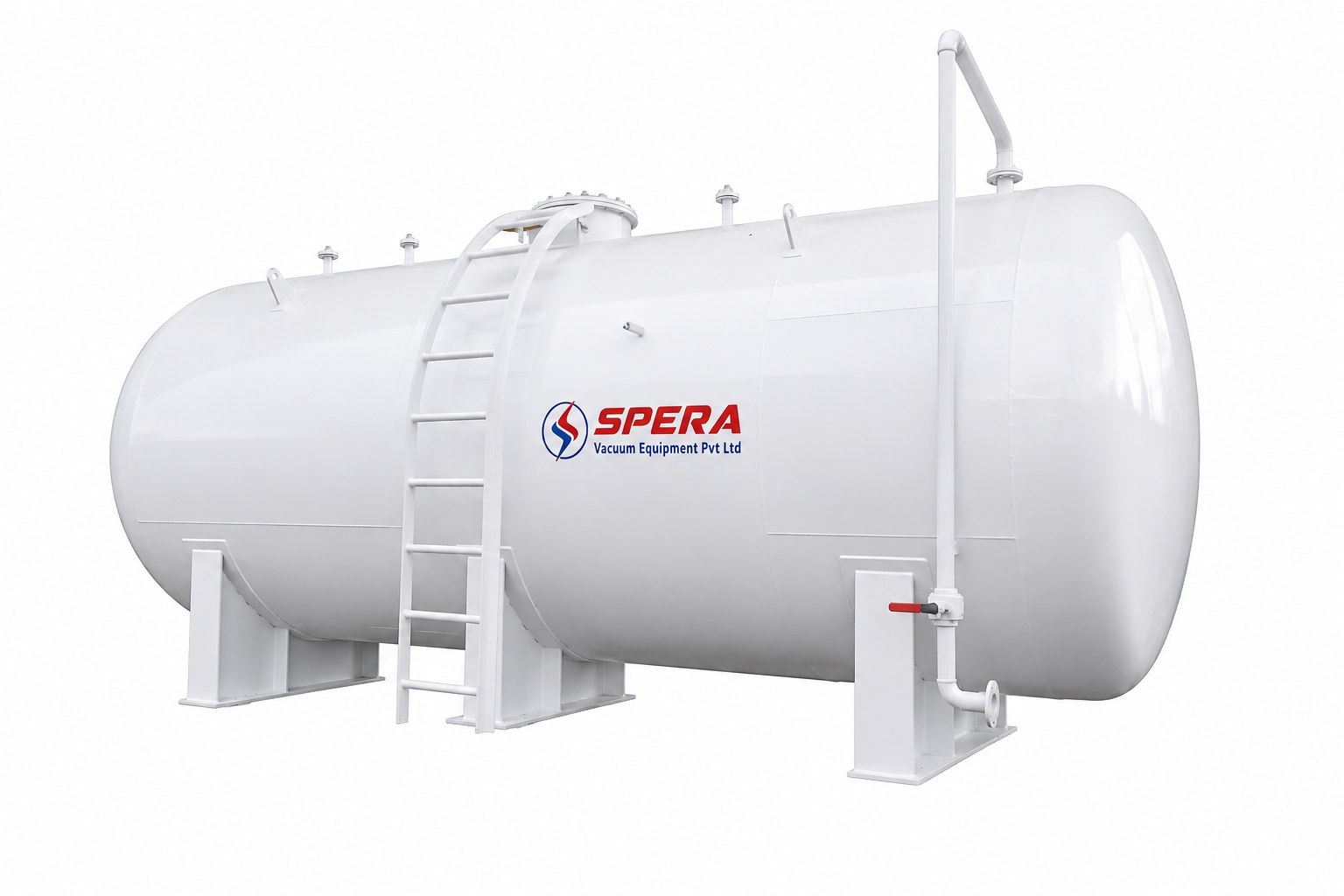
Oil Storage Tank: Safe and Reliable Transformer Oil Storage
Transformer oil is an important part of oil-filled electrical equipment. It provides electrical insulation and helps transfer heat away from the transformer's active components.
But maintaining transformer oil quality does not begin when the oil enters the transformer. It starts much earlier — with how the oil is stored.
Oil that has already been filtered or treated can still be affected if it is stored in unsuitable conditions. Moisture, dust, contaminants, leakage, and uncontrolled handling can compromise oil quality before it is used.
This is why a properly designed Oil Storage Tank is an important part of transformer oil management.
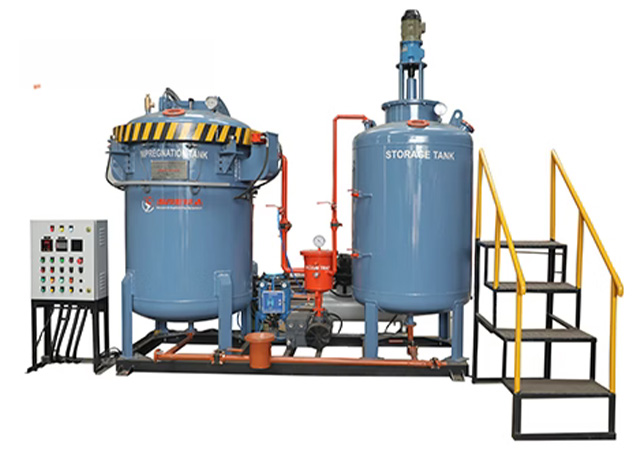
An industrial oil storage tank provides a dedicated and controlled environment for storing transformer oil before filtration, after treatment, during manufacturing, or before it is transferred into electrical equipment.
Spera Vacuum Equipment Pvt. Ltd. manufactures oil-handling equipment for transformer and industrial applications, including dedicated oil storage solutions.
What Is an Oil Storage Tank?
An Oil Storage Tank is a purpose-designed industrial tank used to store transformer insulating oil safely before or after processing.
Instead of storing oil in temporary containers or using makeshift arrangements, a dedicated tank provides a controlled storage point within the oil-handling process.
Depending on the application, the tank can be used for:
- Fresh transformer oil storage
- Filtered oil storage
- Treated oil storage
- Buffer storage
- Oil awaiting transformer filling
- Oil recovered during maintenance
- Oil used in transformer servicing
The required tank configuration depends on oil volume, installation environment, handling process, and the overall transformer oil management system.
Why Is Proper Transformer Oil Storage Important?
Transformer oil needs to maintain suitable cleanliness and moisture conditions to perform its intended insulation and cooling functions.
Even when oil has been properly treated, poor storage conditions can introduce contaminants again.
For example, oil may be filtered and then transferred into an unsuitable container. During storage, it could be exposed to moisture or contaminants before being transferred to the transformer.
This can undermine the effort already invested in oil treatment.
Proper storage therefore forms an important link between oil treatment and final application.
A dedicated tank helps provide a more controlled environment and makes oil movement easier to organize.
What Can Happen When Transformer Oil Is Stored Improperly?
Poor storage practices can create several potential problems.
Moisture Contamination
Exposure to humid conditions can introduce unwanted moisture into transformer oil.
Dust and Foreign Particles
Open or unsuitable storage arrangements can allow dust and other contaminants to enter the oil.
Oil Losses
Poorly controlled storage and transfer can result in unnecessary oil leakage or wastage.
Handling Difficulties
Temporary storage arrangements often require additional pumps, hoses, containers, and manual connections.
Reduced Oil Quality
Repeated exposure to uncontrolled conditions can affect the cleanliness and overall condition of the oil before it reaches the transformer.
For transformer manufacturers and service teams, proper storage helps maintain better control over the oil throughout its handling cycle.
How Does a Transformer Oil Storage Tank Work?
The basic function of the tank is straightforward: receive, contain, protect, and supply transformer oil when required.
A typical process can involve the following stages.
1. Oil Transfer Into the Tank
Transformer oil is transferred into the storage tank from a source such as an oil delivery system, filtration machine, or treatment equipment.
The transfer arrangement depends on the overall oil-handling setup.
2. Controlled Storage
The oil remains inside the dedicated tank until it is required for another operation.
The tank provides a designated storage location instead of relying on temporary containers or exposed storage.
3. Oil Monitoring
Depending on the system configuration, operators can monitor relevant tank conditions and oil quantity through the available instrumentation.
4. Oil Transfer for Further Processing
When required, the stored oil can be transferred to filtration equipment, an oil handling system, or another process stage.
5. Transformer Filling
After the oil has reached the required condition, it can be transferred toward the transformer for filling.
This makes the storage tank an important connection between oil treatment, storage, and final transformer application.
Where Are Oil Storage Tanks Used?
Oil storage tanks are useful in several transformer-related environments.
Transformer Manufacturing Plants
Transformer manufacturers may need to store oil before filtration, after treatment, or before final filling.
Dedicated storage capacity helps organize oil movement across different production stages.
Transformer Oil Filtration Facilities
After filtration, treated oil may need to be temporarily stored before it is transferred to the transformer.
A dedicated tank provides a controlled holding point for this oil.
Transformer Repair Workshops
Repair and servicing operations can involve draining and storing transformer oil before treatment and reuse.
A dedicated tank can make these operations easier to manage.
Power Utilities
Utilities may require oil storage during transformer maintenance, oil replacement, or servicing activities.
Transformer Testing Facilities
Testing setups may also require controlled oil storage before or after specific testing and processing operations.
Oil Treatment Systems
Storage tanks can be integrated with broader transformer oil filtration, heating, circulation, and handling systems.
Oil Storage Tank vs. Temporary Oil Storage
A dedicated industrial tank offers a more structured approach than temporary containers or makeshift storage arrangements.
| Temporary Oil Storage | Dedicated Oil Storage Tank |
|---|---|
| Often relies on separate containers | Purpose-built storage |
| More manual handling | Easier integration with oil systems |
| Greater number of connections | Organized transfer arrangement |
| Limited scalability | Capacity can be customized |
| Difficult to integrate into production | Can be integrated with oil treatment |
| Greater handling dependence | More controlled oil management |
The objective is not simply to store more oil. It is to create a controlled storage point within the complete transformer oil process.
Main Components and Design Considerations
The exact configuration depends on the customer's requirements, but several factors are important when designing an oil storage solution.
Storage Capacity
The tank should have sufficient capacity for the amount of transformer oil that needs to be stored.
Capacity may depend on transformer size, production volume, maintenance requirements, and whether the tank is being used as primary or buffer storage.
Tank Construction
The tank construction should be suitable for storing transformer insulating oil in the intended operating environment.
Industrial construction is particularly important when the tank will be used repeatedly in manufacturing or service operations.
Oil Connections
Suitable inlet and outlet connections allow the tank to integrate with pumps, filtration equipment, and other oil-handling systems.
Drainage Arrangement
A suitable drainage arrangement can simplify tank emptying and maintenance.
Instrumentation
Depending on the application, level monitoring and other instrumentation can be incorporated into the tank system.
Integration With Oil Handling Equipment
The tank can be designed as part of a larger system involving pumps, filters, heating equipment, piping, and valves.
Why Is Oil Storage Important After Filtration?
This is an often-overlooked part of transformer oil treatment.
Filtration removes unwanted contaminants and moisture from transformer oil, but the oil still needs to be protected after treatment.
Imagine filtering a batch of transformer oil and then storing it in an uncontrolled environment. If moisture or contaminants enter during storage, some of the benefits of the previous treatment can be compromised.
A properly designed storage tank provides a controlled holding point between oil treatment and final use.
This is particularly useful in transformer manufacturing facilities where oil may be processed in one stage and required later during filling.
Benefits of Using a Dedicated Oil Storage Tank
Protects Stored Oil
A dedicated tank provides a controlled environment for transformer oil storage.
Reduces Contamination Risk
Properly designed storage and connections can help minimize unnecessary exposure to contaminants.
Supports Oil Quality
Maintaining controlled storage conditions helps preserve the condition of treated transformer oil before use.
Improves Handling Efficiency
A dedicated tank makes it easier to transfer oil between storage and other process equipment.
Reduces Oil Wastage
Controlled storage and transfer can help reduce unnecessary losses.
Supports Production Workflow
Manufacturers can maintain oil availability between filtration, storage, and transformer filling stages.
Simplifies Maintenance Operations
For transformer repair and servicing, dedicated storage provides a defined location for drained or treated oil.
How to Choose the Right Oil Storage Tank
Selecting the right tank depends on the application rather than simply choosing the largest available capacity.
Required Oil Capacity
Determine the maximum quantity of oil that needs to be stored at one time.
Application
Consider whether the tank will be used for fresh oil, filtered oil, treated oil, recovered oil, or buffer storage.
Installation Location
The available space and installation environment should be considered during system design.
Transfer Requirements
The tank should have suitable connections for pumps, pipelines, filters, and other equipment involved in oil movement.
Integration
If the tank will form part of an existing oil handling or filtration system, its connections and capacity should match the overall process.
Maintenance
Consider accessibility for inspection, cleaning, drainage, and other maintenance activities.
Customization
Different transformer manufacturers and service providers may have significantly different storage requirements, making customized tank capacity and layout useful.
Comparing suppliers? See the Oil Storage Tank product page for features, configurations and customization options, or talk to our engineers about your application.
Why Choose Spera Vacuum?
Spera Vacuum Equipment Pvt. Ltd. manufactures transformer oil filtration, vacuum, drying, impregnation, and oil-handling equipment from Pune, India. Its product range specifically includes an Oil Storage Tank within its oil-handling systems.
Spera Vacuum's broader equipment range allows oil storage to be considered alongside systems for oil filtration, transfer, evacuation, drying, and impregnation.
This can be useful for manufacturers and service providers looking to create a more integrated transformer oil management setup rather than sourcing every component separately.
Our project process includes system design and engineering, precision manufacturing, testing and quality control, installation, commissioning, and support.
Frequently Asked Questions
What is an Oil Storage Tank?
An Oil Storage Tank is an industrial tank designed to safely store transformer insulating oil before or after processes such as filtration, treatment, maintenance, or transformer filling.
Why is a dedicated transformer oil storage tank needed?
A dedicated tank provides a controlled storage point and helps reduce unnecessary exposure to moisture, dust, and other contaminants during oil handling.
Where are transformer oil storage tanks used?
They can be used in transformer manufacturing plants, oil filtration facilities, repair workshops, utility maintenance operations, testing facilities, and oil-handling systems.
Can an Oil Storage Tank be integrated with a filtration system?
Yes. The tank can form part of a broader oil-handling arrangement connecting storage with filtration, pumping, circulation, and transformer filling.
Can the storage capacity be customized?
The required capacity depends on the application, transformer size, oil volume, production requirements, and overall process layout. A customized configuration can therefore be considered where standard capacity is not suitable.
Can the tank be used for treated transformer oil?
Yes. Dedicated storage can provide a holding point for treated or filtered oil before it is transferred for final use.
Can it be used during transformer maintenance?
Yes. Storage is useful during maintenance and repair operations where transformer oil may need to be drained, stored, treated, and subsequently refilled.
Conclusion
Transformer oil quality is influenced not only by filtration and treatment but also by what happens between those processes and the final application.
Oil needs a suitable place to be stored before it is transferred to a transformer. Uncontrolled storage can expose treated oil to moisture, dust, contamination, and unnecessary handling.
A dedicated Oil Storage Tank provides a more organized and controlled solution.
For transformer manufacturers, oil filtration facilities, utilities, repair workshops, and service providers, the right storage arrangement can simplify oil management and support a more consistent workflow.
Spera Vacuum offers Oil Storage Tank solutions as part of its broader range of transformer oil handling and treatment equipment, allowing storage to be incorporated into a wider oil management system.
Looking for an Oil Storage Tank?
If you need an oil storage solution for transformer manufacturing, oil filtration, maintenance, testing, or servicing, discuss your required oil capacity, installation environment, and process connections with Spera Vacuum.
Explore Spera Vacuum
Recent Posts
Contact
Have a project in mind? Contact Us
From oil purification and evacuation systems to VPI and drying plants, our team delivers reliable, high-performance solutions tailored to your industrial requirements.
Opening Hours
Mon - Sat
09 AM - 07 PM
Get in Touch
Our skilled engineering team is ready to assist you with any inquiries.